How WiFi 7 Multi-Link Traffic Scheduling Helps Orbi Networks Maintain Stable Performance During Simultaneous Streaming and Gaming in 2026
Home networks are carrying more demanding traffic than ever. In 2026, it is common for one person to stream a high-resolution movie while another plays an online game, joins a video call, or downloads a large file. At the same time, smart TVs, phones, security cameras, and connected appliances may continue using the network in the background.
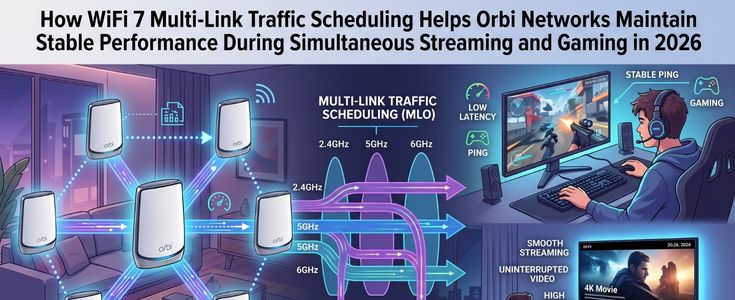
This combination can put significant pressure on a traditional wireless network. WiFi 7 introduces technologies designed to use wireless resources more efficiently, including Multi-Link Operation (MLO). When supported by compatible Orbi hardware and client devices, multi-link traffic management can help distribute network activity across available links and maintain a more consistent experience.
For users managing their Orbi network, understanding how these technologies work can make it easier to optimize a busy connected home. The orbi login interface can provide access to supported network settings, while the orbi app offers convenient management features on compatible Orbi systems.
What Is Multi-Link Operation?
Multi-Link Operation, commonly known as MLO, is one of the key capabilities associated with WiFi 7. Earlier WiFi generations generally relied on a single wireless link for a client connection at a given time. MLO allows compatible devices to establish communication using multiple wireless links.
Depending on the hardware and configuration, these links can use different WiFi bands. The potential benefits include:
- Better network resource utilization
- Improved responsiveness
- Greater flexibility during congestion
- More efficient traffic handling
- Improved connection resilience
The actual experience depends on the specific router, Orbi system, client device, firmware, and wireless environment.
Why Streaming and Gaming Compete for Resources
Streaming and gaming have different networking requirements. A streaming service may require a relatively consistent flow of data to prevent buffering. Online gaming, on the other hand, is usually more sensitive to latency and responsiveness than raw bandwidth.
When both activities happen simultaneously, the network must handle different traffic patterns at the same time.
For example:
- A smart TV may stream 4K video.
- A gaming console may communicate continuously with an online server.
- A laptop may download files.
- Smartphones may synchronize cloud data.
- Smart cameras may upload video.
Without effective traffic management, congestion can affect the overall experience.
How Multi-Link Traffic Scheduling Helps
WiFi 7’s multi-link capabilities can provide compatible devices with more flexibility in how wireless resources are used.
Instead of relying on one link for all communication, a compatible system can coordinate traffic across multiple links according to available network conditions.
This can help the network respond to:
- Congestion
- Changing signal conditions
- High traffic demand
- Interference
- Different application requirements
Rather than simply adding more bandwidth, the technology aims to make better use of available wireless resources.
Supporting Stable Gaming Performance
Gaming is particularly sensitive to network interruptions.
A game may not require as much bandwidth as a 4K video stream, but sudden increases in latency can affect gameplay.
Players may notice:
- Delayed responses
- Lag
- Temporary disconnects
- Unstable multiplayer sessions
A WiFi 7 network with compatible MLO support can potentially provide a more flexible wireless connection by using multiple links.
However, MLO cannot eliminate every cause of gaming latency. Internet service quality, game-server distance, congestion outside the home, and the gaming device itself can all influence performance.
Maintaining Smooth Video Streaming
High-resolution video streaming can consume considerable bandwidth. When several users stream simultaneously, the wireless network must handle sustained traffic from multiple devices.
Multi-link operation can help compatible systems use wireless resources more efficiently. This may reduce the likelihood that one high-bandwidth activity unnecessarily disrupts another device’s connection.
Still, users should remember that streaming quality also depends on the internet connection, streaming service, device capabilities, and available bandwidth.
Why Orbi Mesh Networks Benefit
Mesh networking is designed to provide broader wireless coverage through multiple nodes. In a larger home, devices may connect through different Orbi units depending on their location.
A WiFi 7-capable Orbi system can combine mesh networking with advanced wireless technologies to manage traffic across the home.
This is particularly useful for households where high-bandwidth devices are distributed across multiple rooms or floors.
MLO and Backhaul Performance
A mesh network has more than one important connection to manage. The system must maintain communication between mesh units while also serving connected client devices.
The quality of the mesh backhaul can influence overall performance. If the backhaul is congested or weak, connected devices may experience slower speeds even when their local WiFi signal appears strong.
Modern mesh systems therefore need to coordinate both client traffic and communication between network nodes.
Importance of Compatible Devices
WiFi 7 features require compatible hardware. A WiFi 7 Orbi router cannot automatically provide every MLO benefit to an older WiFi device.
Users should consider:
- Router capabilities
- Orbi satellite capabilities
- Client WiFi generation
- Firmware versions
- Wireless configuration
As more WiFi 7 smartphones, laptops, gaming devices, and streaming hardware become available, the benefits of advanced multi-link networking are likely to become more noticeable.
Managing Orbi With Orbi Login
The orbi login interface can be useful when users need to access supported network-management settings. Depending on the specific Orbi model, the management interface may provide access to options related to:
- Wireless configuration
- Connected devices
- Security
- Firmware
- Network information
- Advanced settings
Users should follow the instructions provided for their particular Orbi model because available features can vary.
Using the Orbi App
The orbi app provides a convenient way to manage supported Orbi systems from a mobile device. Depending on the system, users may be able to:
- Complete network setup
- View connected devices
- Run speed tests
- Monitor network status
- Manage security features
- Check supported settings
Keeping the app and Orbi firmware updated can help ensure access to current supported functionality.
Placement Still Matters
Advanced WiFi technology cannot completely overcome poor router or satellite placement. For best results, users should consider:
- Central positioning
- Distance between mesh units
- Thick walls
- Metal obstacles
- Floor-to-floor coverage
- Nearby wireless interference
A mesh satellite placed too far from the main router may have difficulty maintaining a reliable backhaul connection.
Traffic Management Beyond MLO
MLO is only one component of modern network performance. A stable home network can also benefit from:
- Quality-of-service features
- Device prioritization
- Band steering
- Automatic channel selection
- Firmware updates
- Proper satellite placement
Together, these technologies can help the network respond to changing traffic demands.
The Future of WiFi 7 Home Networks
As WiFi 7 adoption grows, home networking is expected to become increasingly adaptive. Future systems may combine MLO with:
- AI-based traffic prediction
- Dynamic spectrum management
- Automated interference detection
- Intelligent device prioritization
- Predictive congestion control
This could allow routers and mesh systems to automatically adjust wireless resources as household activity changes.
Final Thoughts
WiFi 7 Multi-Link Operation represents an important development in wireless networking. By allowing compatible devices to communicate across multiple wireless links, MLO can provide more flexibility in managing network traffic.
For Orbi mesh networks, this capability can be especially useful when demanding activities such as gaming and high-resolution streaming occur simultaneously. Effective multi-link traffic scheduling can help the network use available wireless resources more efficiently while maintaining responsiveness for different types of devices.
Users can access supported management features through orbi login, while the orbi app provides a convenient way to monitor and manage compatible Orbi systems.
However, MLO is not a replacement for a reliable internet connection, good mesh placement, compatible client hardware, or appropriate network configuration. When these elements work together, WiFi 7 technology can help connected homes maintain a smoother and more stable experience as the number of bandwidth-hungry devices continues to grow in 2026.